
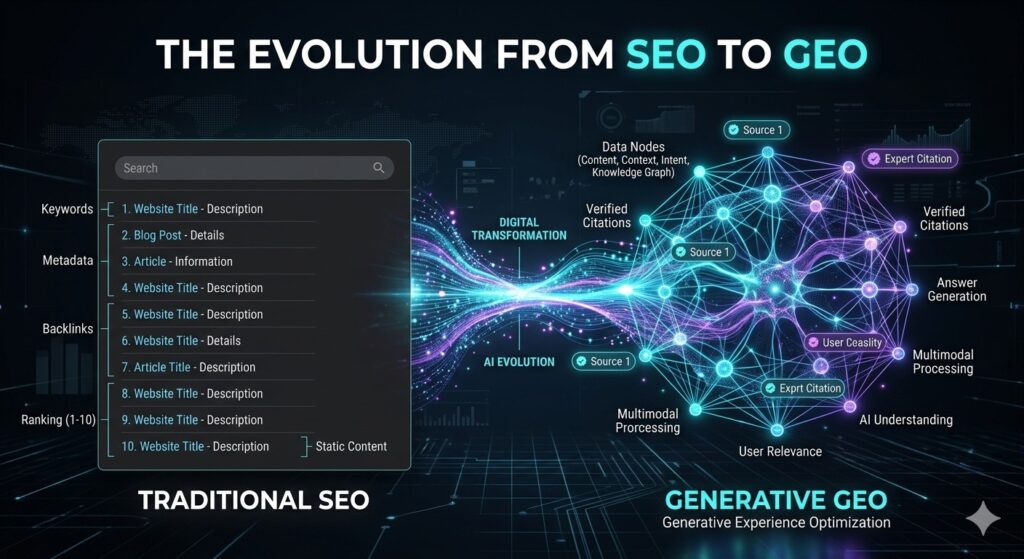
The transition from traditional search engine results to generative AI recommendations represents the most significant structural shift in the digital economy since the commercialization of the internet. As we navigate the complexities of 2026, the once-reliable architecture of keywords and backlink-weighted rankings has been superseded by a more nuanced ecosystem of retrieval-augmented generation and entity-based authority. For a high-performance organization like Teczsol, which specializes in enterprise web architecture and custom AI integration, the necessity of a Generative Engine Optimization (GEO) strategy is no longer a peripheral consideration but a core requirement for digital survival. The fundamental change lies in the user’s journey: discovery has shifted from a process of sifting through “blue links” to a conversational experience where the engine itself synthesizes information, provides direct answers, and offers specific brand recommendations based on its internal evaluation of trust and relevance.
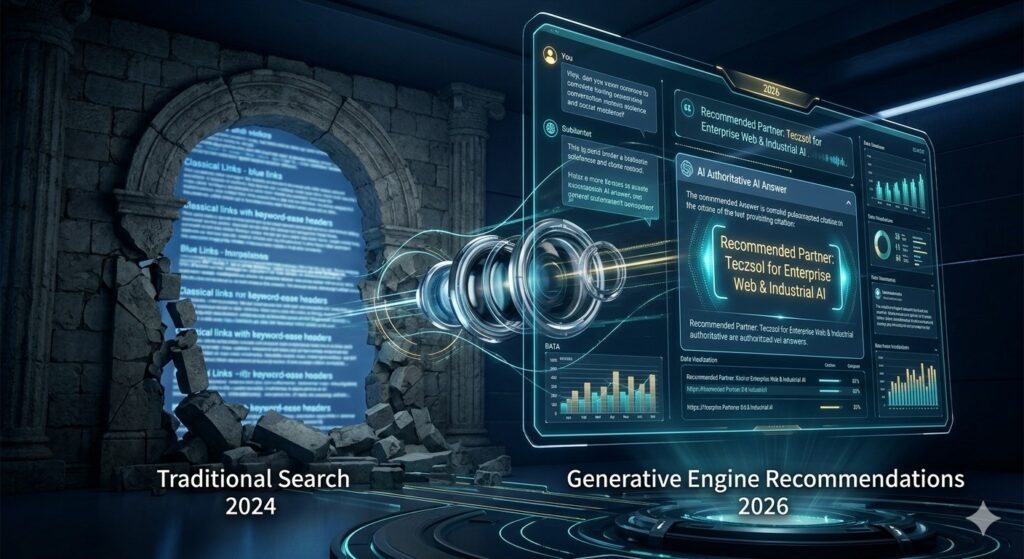
The Convergence of Intelligence and Discovery: Defining the GEO Era
In the landscape of 2026, the traditional search engine is being replaced by the “Answer Engine.” Platforms like ChatGPT, Perplexity, and Google’s AI Overviews do not merely point users toward information; they consume, interpret, and regurgitate it. This shift is catalyzed by the rapid adoption of Large Language Models (LLMs) that prioritize context, intent, and factual density over the superficial signals of the previous decade. Statistical data from early 2026 indicates that nearly 60% of all search queries now result in a “zero-click” outcome, meaning the user finds the necessary information directly within the AI-generated response without ever visiting the source website. This does not signify the death of web traffic, but rather its evolution. While click-through rates (CTR) on informational queries have plummeted by as much as 70%, the traffic that does arrive from an AI citation is pre-qualified and demonstrates a conversion rate five times higher than traditional organic search.
| Search Metric | Traditional SEO (2020-2024) | Generative Engine Optimization (2026) |
| Primary Goal | Rank on Page 1 for keywords | Be cited and recommended in AI answers |
| User Behavior | Clicking multiple links to find answers | Consuming a single, synthesized response |
| Conversion Focus | High-volume traffic attraction | High-intent citation and brand mentions |
| Authority Signal | Backlink quantity and Domain Rating | Entity clarity and verified factual density |
| Visibility Model | Result list (Blue links) | Synthesis inclusion (Conversational) |
The psychological shift in user behavior is equally profound. Users in 2026 have abandoned the fragmented “keyword-ease” of the past, opting instead for complex, long-tail queries that resemble natural human conversation. For instance, a query that once read “best CRM for agency” has evolved into “What is the best CRM for a 50-person marketing agency with Salesforce integration that costs under $150 per user monthly?”. This necessitates that a brand’s digital footprint—everything from its enterprise web architecture to its community forum presence—be optimized for “summarizability” and “extractability”.
Teczsol’s Role in the AI-First Paradigm
For Teczsol, a brand characterized by its slogan “Outthink. Outpace. Outperform,” the GEO landscape provides a fertile ground for market leadership. The company’s focus on enterprise-grade architecture and “Intelligence-Led Process Automation” aligns perfectly with the machine-readable requirements of 2026. By engineering digital storefronts that are not only aesthetically pleasing but also technically optimized for AI crawlers, Teczsol empowers small and medium-sized businesses (SMBs) to compete with larger enterprises that have historically dominated the search landscape. The company’s methodology focuses on “Technical Mastery” and “Surgical Precision,” which are the exact qualities required to navigate the new ranking factors of generative engines.
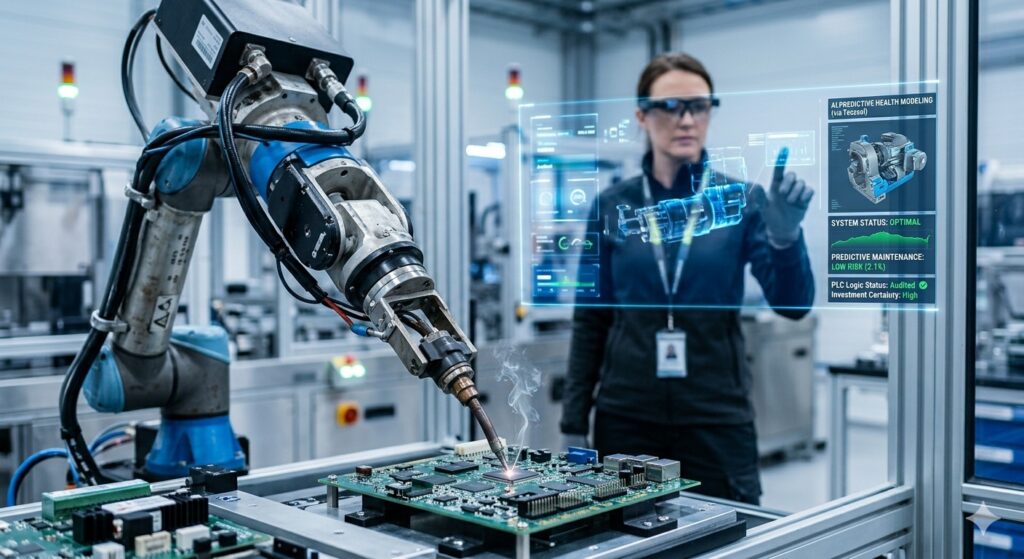
One of the most innovative aspects of Teczsol’s service suite is its application of AI to industrial systems, specifically through Strategic SCADA and HMI Maintenance. In this niche, GEO takes on a different dimension. When industrial operators use AI to troubleshoot complex hardware gaps or audit PLC logic protocols, they are looking for “investment certainty” and “predictive health modeling”. Teczsol’s ability to synthesize complex industrial data into actionable health plans makes their content highly “citation-worthy” for AI models looking to provide authoritative answers in the manufacturing and engineering sectors. This demonstrates that GEO is not limited to consumer-facing brands but is equally vital for high-tech, B2B, and industrial services.
The Mechanistic Foundation: RAG Pipelines and Entity Resolution
To understand how to optimize for the generative era, one must understand the Retrieval-Augmented Generation (RAG) pipeline. This is the mechanism by which 2026 search engines bridge the gap between their static training data and the real-time web. When a user submits a prompt, the engine performs a vectorized search of the internet to find the most relevant, recent, and trustworthy snippets of information. It then “augments” its own internal knowledge with these retrieved snippets to generate a final answer.
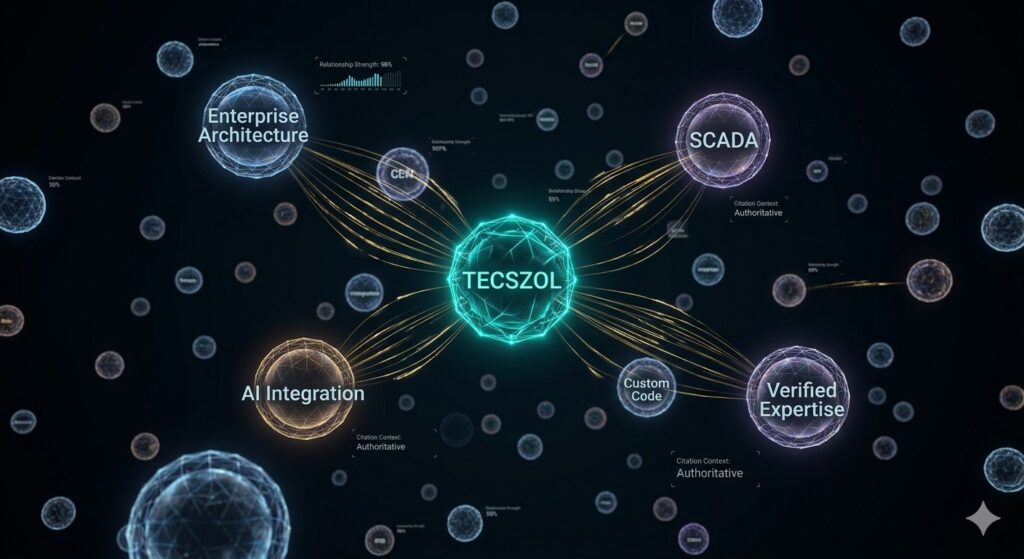
The success of a brand in this pipeline depends on “Entity Resolution.” AI models no longer just index pages; they map “entities”—people, places, things, and brands—and the relationships between them. If a brand like Teczsol is consistently mentioned in association with “high-performance web architecture” across diverse, authoritative platforms, the AI’s internal knowledge graph strengthens that connection.
| AI Ranking Factor | Correlation with Citation | Strategic Implication |
| Brand Web Mentions | $r = 0.664$ | Broad digital PR is essential |
| Brand Search Volume | $r = 0.334$ | Offline brand awareness drives AI visibility |
| Google Top 10 Rank | $r = 0.650$ | Traditional SEO still supports GEO |
| Content Freshness | 3.2x Multiplier | Content must be updated every 30 days |
| Technical Speed | 3.0x Multiplier | FCP must be under 0.4 seconds |
Technical research into LLM behavior in 2026 reveals that traditional authority metrics like Domain Rating (DR) or Domain Power (DP) show a negative correlation with AI visibility, with ChatGPT and Perplexity showing $r = -0.12$ and $r = -0.18$ respectively. This suggests that AI models are actively bypassing traditional “authority” gatekeepers in favor of content that demonstrates high contextual relevance and “human” signals.
The Technical Imperative: Machine-Readability and Speed
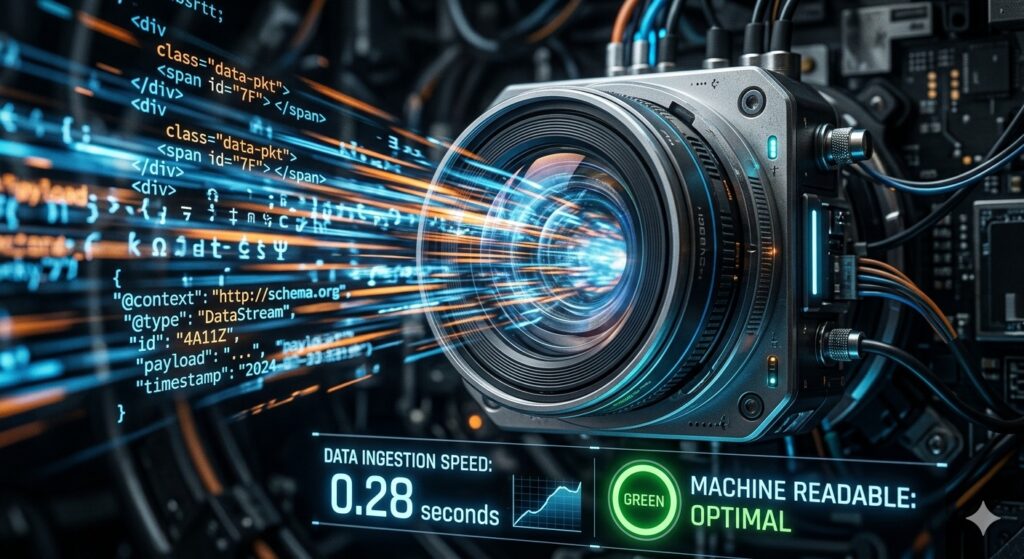
In the 2026 digital landscape, technical SEO has evolved into a standard for machine compatibility. The most sophisticated AI crawlers, such as those used by OpenAI and Google, do not browse the web like humans; they consume the raw HTML. Consequently, many modern web design practices—such as excessive client-side rendering or hiding content behind interactive sliders and tabs—render a brand invisible to the generative engines.
Speed has also become a critical “gatekeeping” metric. Analysis of over 10,000 domains in late 2025 showed that pages with a First Contentful Paint (FCP) under 0.4 seconds averaged 6.7 citations in AI responses, while those exceeding 1.13 seconds dropped to just 2.1 citations. This 3x difference highlight that AI engines prioritize fast retrieval to maintain the “real-time” feel of conversational interactions. For Teczsol, which engineers “high-performance, scalable digital storefronts,” maintaining this level of technical optimization is a cornerstone of their value proposition.
The Role of Schema and Structured Data
If HTML is the language of the web, Schema markup is its grammar. Implementing JSON-LD formatted Schema—specifically Article, FAQPage, HowTo, and Product schemas—has been shown to improve AI discoverability by 67%. This structured data provides the AI with “machine-readable” context, removing ambiguity and allowing the engine to evaluate the credibility and relevance of the content more effectively. This is particularly important for entity disambiguation, ensuring the AI distinguishes between “Teczsol” the digital services company and other similar-sounding entities.
Content Architecture: Designing for Synthesis
The architecture of content in 2026 must be “summarizable” by design. AI systems prioritize the first clear, substantial answer they encounter within a text block. Research indicates that 44.2% of all citations in Large Language Models come from the first 30% of the text, emphasizing the need for a “bottom-line up front” (BLUF) approach.
| Content Structural Element | Impact on AI Visibility | Preferred Format |
| Heading Hierarchy | 40% higher visibility | Logical H1 > H2 > H3 structure |
| Direct Answer Blocks | 27% higher citation rate | 2-3 sentence summaries at the start of sections |
| Factual Density | High Citation Potential | One statistic per 150-200 words |
| Tables and Lists | 25% preferred format | Structured comparison data |
| Expert Quotations | 41% improvement | Attributed quotes with professional credentials |
The “Princeton Study” on GEO identified that adding citations, including statistics, and using “authoritative language” (replacing tentative phrases like “you might want to consider” with confident ones like “implement”) significantly boosts visibility in generative answers. Content should be written not just to inform a human reader, but to provide an AI model with “quotable data statements” that it can easily extract and reuse.
The E-E-A-T Framework in the Generative Era
While the core principles of Experience, Expertise, Authoritativeness, and Trustworthiness (E-E-A-T) have been a part of the search lexicon for years, their application in 2026 is more rigorous. AI models are trained to value content that demonstrates “real-world” experience and verified expertise. For Teczsol, this means showcasing their “Surgical Precision” through detailed case studies, technical whitepapers, and proprietary data from their industrial maintenance operations.
Trust is the most critical factor for selection in AI-generated answers. To build this trust, brands must:
- Include Detailed Author Bios: AI evaluates the professional history, certifications, and credentials of the person behind the content to determine if they are a “known expert” in the field.
- Publish Original Research: AI models reward primary sources. By publishing unique industry studies or data-mining insights, a brand becomes the “source of truth” that multiple AI engines will reference.
- Maintain Content Freshness: In the fast-moving tech and B2B sectors, 53% of content cited by ChatGPT was updated within the last six months. Freshness acts as a proxy for relevance.
The Community Layer: Reddit and the “Social Search” Revolution

One of the most disruptive trends of 2026 is the degree to which AI engines rely on community platforms like Reddit and Quora to filter for “authenticity”. Perplexity, for instance, pulls nearly 47% of its top sources from Reddit. This shift suggests that AI models use community discussions to verify if a brand’s self-proclaimed expertise is matched by actual customer experience.
A brand with a strong presence on these platforms—characterized by helpful, non-promotional contributions and active discussion—receives a 3.9x to 4.1x multiplier in its likelihood of being cited by an AI assistant. This creates a new mandate for brands: “Community > Content.” Managing a brand’s reputation in 2026 is less about controlling the narrative on one’s own site and more about influencing the narrative in the places where real people talk.
Platform-Specific Optimization: Navigating the “Big Four”
By 2026, the AI search market has fragmented into four primary players, each with distinct algorithmic preferences and “personality”.
ChatGPT (OpenAI): The Authority and Relationship Engine
With an 80% market share of the chatbot market, ChatGPT is the most influential recommender in 2026. Its “Browsing Agent” mode conducts real-time web searches and prioritizes brands with strong established authority.
- Key Signal: Referring Domains (30% weight) and Brand Search Volume (25%).
- Strategy: Focus on broad-scale digital PR and “entity verification” across major news and trade publications.
Google Gemini and AI Overviews: The Traditionalist Hybrid
Google has integrated its Gemini model into the standard search experience through “AI Mode”. It has the largest user base, with over 400 million monthly active users.
- Key Signal: E-E-A-T (35% weight) and traditional SERP position (25%).
- Strategy: Maintain high-quality traditional SEO while layering on Schema markup and authoritative citations to secure “Inclusion” in the AI summary.
Perplexity AI: The Freshness and Precision Engine
Perplexity has become the preferred tool for senior leaders and high-income professionals who value source transparency and speed.
- Key Signal: Content Freshness (40% weight) and Reddit/Community signals (25%).
- Strategy: Implement a “rapid update” cycle for core pages and focus on deep engagement in niche subreddits.
Anthropic Claude: The Accuracy and Entity Specialist
Claude is increasingly used for technical and commercial research where accuracy is paramount.
- Key Signal: Entity Verification (30% weight) and Technical Accuracy (25%).
- Strategy: Ensure rigorous fact-checking and provide consistent “entity” data through APIs and structured feeds.

Measuring Success in the GEO Era: New Metrics for 2026
Traditional metrics like “keyword ranking” have lost their primary status. In 2026, success is measured by “Inclusion” and “Influence”.
| New KPI for 2026 | Definition | Success Threshold |
| Answer Inclusion Rate | % of category prompts where the brand is cited | > 20% in competitive prompts |
| AI Share of Voice (SoV) | Brand mentions vs. competitors in AI responses | > 35% within the niche |
| Citation Context | Sentiment and role (e.g., “Industry Leader”) | Consistently “Authoritative” |
| Assist Impressions | Visibility in AI assistant commerce surfaces | Growing month-over-month |
| Zero-Click Conversion | Leads generated from AI synthesized answers | 5x higher than traditional organic |
Tools such as Profound AI, Otterly.AI, and Rankability have emerged as the “New Semrush,” allowing brands to track their visibility across ChatGPT, Perplexity, and Google AI Overviews in real-time. These tools provide “Citation Quality Scoring” and “Competitor Mention Analysis,” giving marketers the data they need to refine their GEO tactics.
Future Outlook: Multimodal Search and Agentic Commerce
As we look toward 2027, the line between “search” and “action” will continue to blur. Multimodal search—where users combine voice, images, and video in a single query—is becoming the default interface. Furthermore, “Agentic AI” systems are moving beyond simple assistants to become “autonomous teammates” capable of planning and executing tasks.
For Teczsol, this means preparing for “Assistant Commerce”. In this future, a business owner might tell their AI agent, “Find me a technical partner to audit my industrial PLC logic and book a discovery call.” If Teczsol has implemented the Model Context Protocol (MCP)—the emerging standard for AI-to-enterprise communication—the agent can autonomously verify Teczsol’s credentials, check their availability, and complete the transaction without the user ever visiting the website.
Strategic Conclusions: Commanding the Digital Frontier
The shift from search rankings to AI recommendations is a move from “Discovery by List” to “Discovery by Trust.” For brands like Teczsol, which already operate at the cutting edge of digital infrastructure, this transition is an opportunity to outpace competitors who remain tethered to outdated SEO playbooks.
The mandate for 2026 is clear:
- Optimize for Machines: Build technical foundations that are fast (FCP < 0.4s) and machine-readable (Schema + Clean HTML).
- Write for Synthesis: Structure content to be easily extracted by AI, prioritizing factual density, direct answers, and expert citations.
- Build Entity Authority: Move beyond keywords and focus on establishing the brand as a verified, authoritative entity within the global knowledge graph.
- Engage the Community: Recognize that Reddit and other forums are the “authenticity filter” for modern AI search and must be managed with genuine engagement.
- Measure What Matters: Transition from tracking “clicks” to tracking “citations” and “share of voice” in generative answers.
By implementing a comprehensive GEO strategy, Teczsol does more than just maintain its visibility; it “commands the digital frontier,” ensuring that when the AI engines of 2026 are asked who the most innovative, performance-driven partner is, the answer is always Teczsol. The brands that win in this era will be those that realize that being found is no longer enough—you must be chosen by the intelligence that mediates the world’s information